
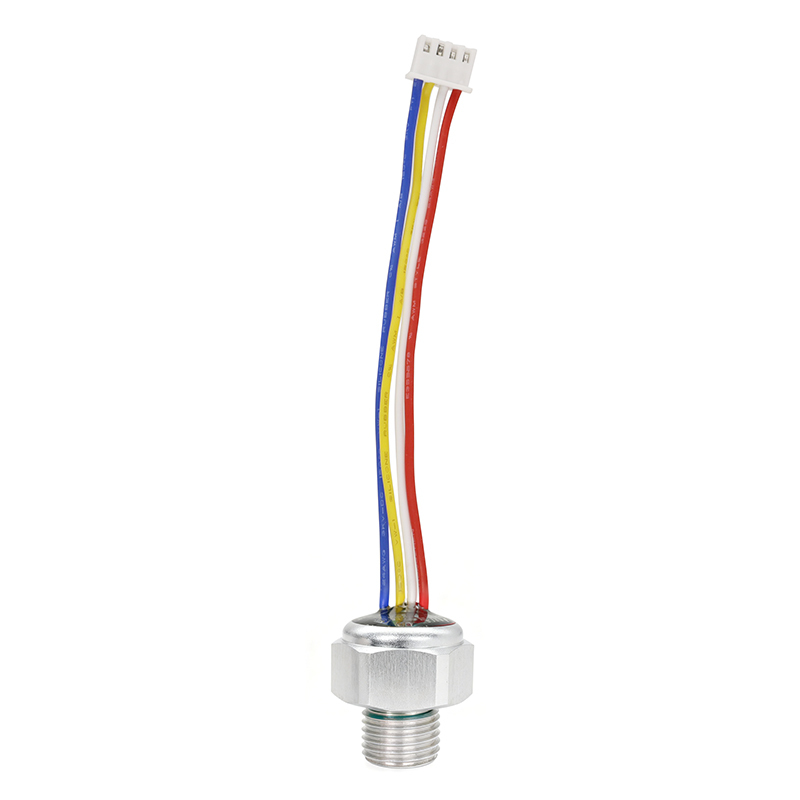
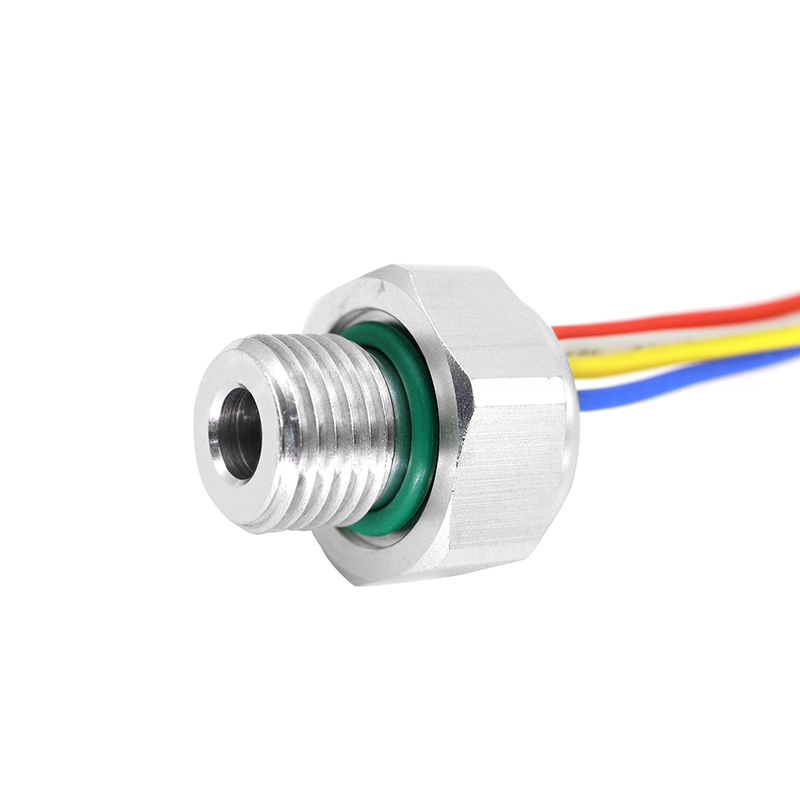
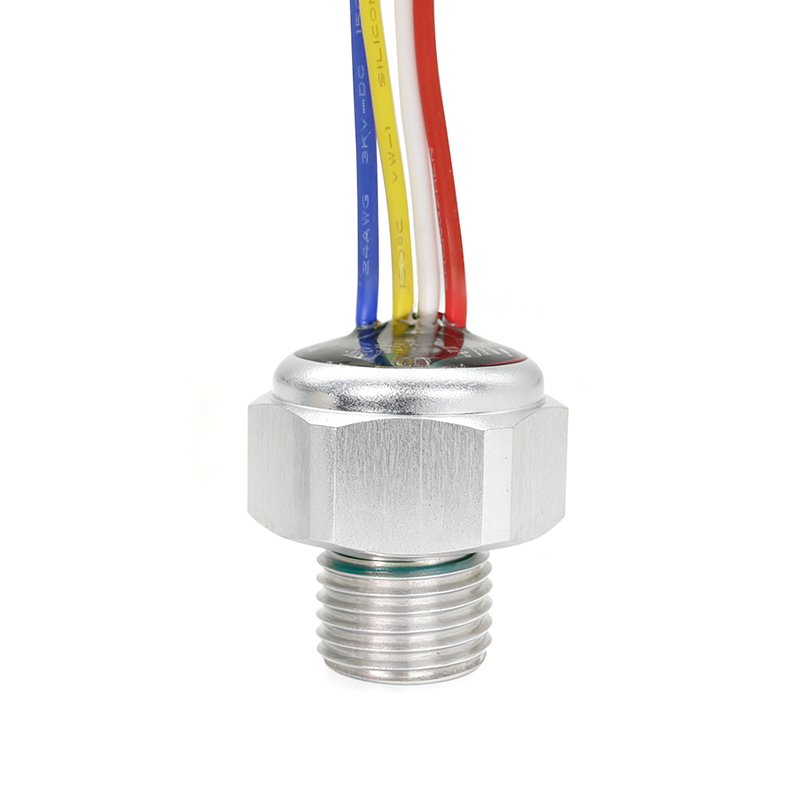
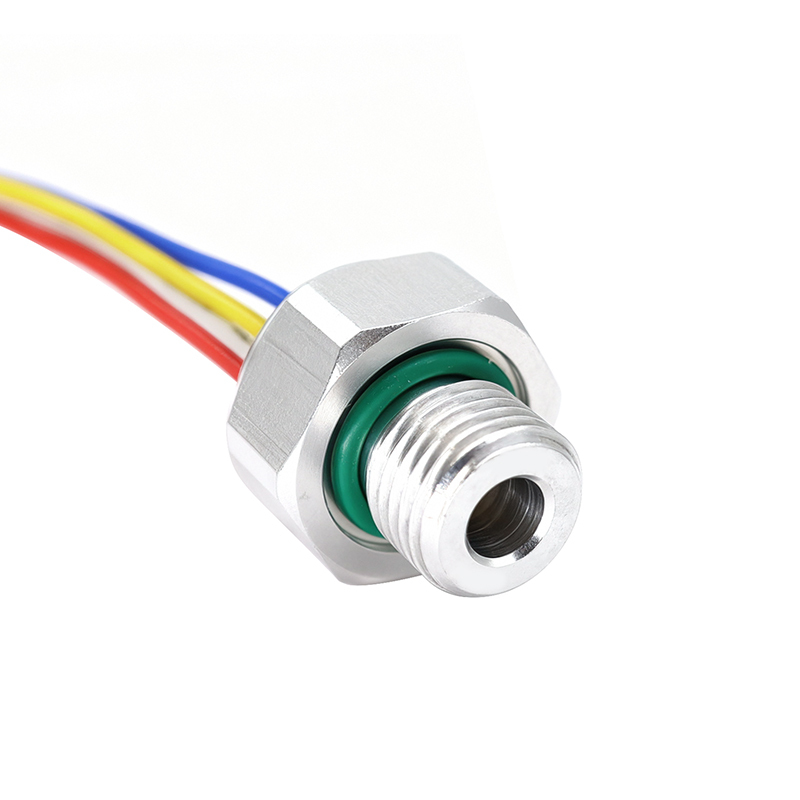
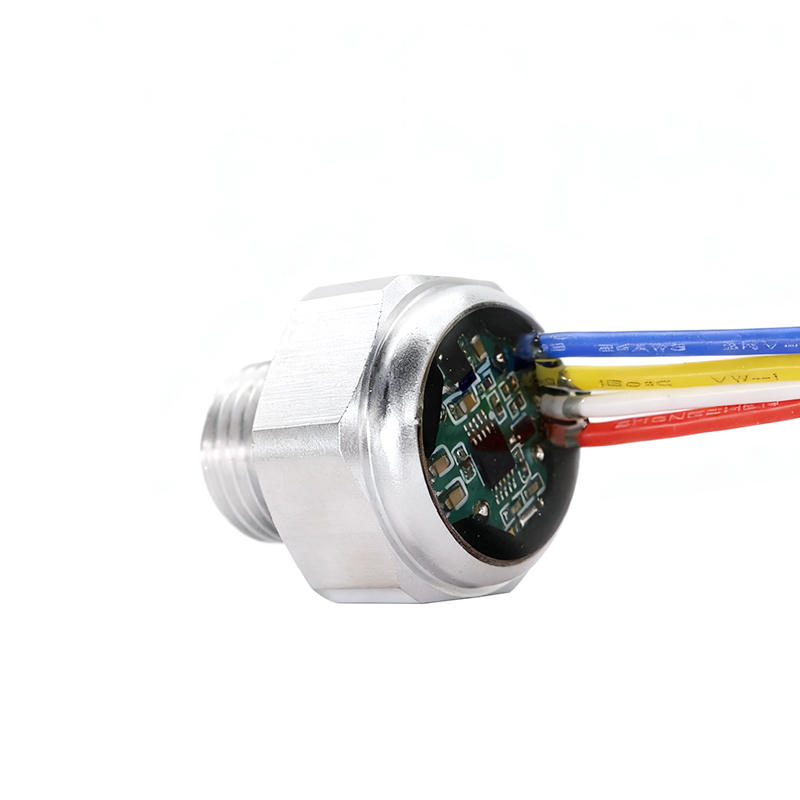
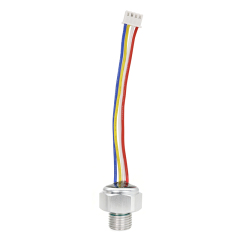
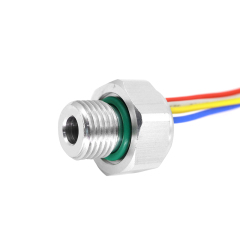
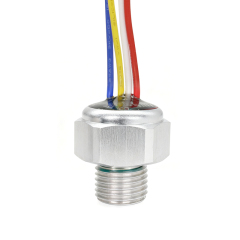
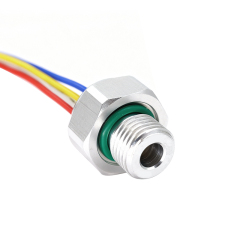
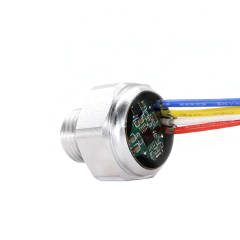
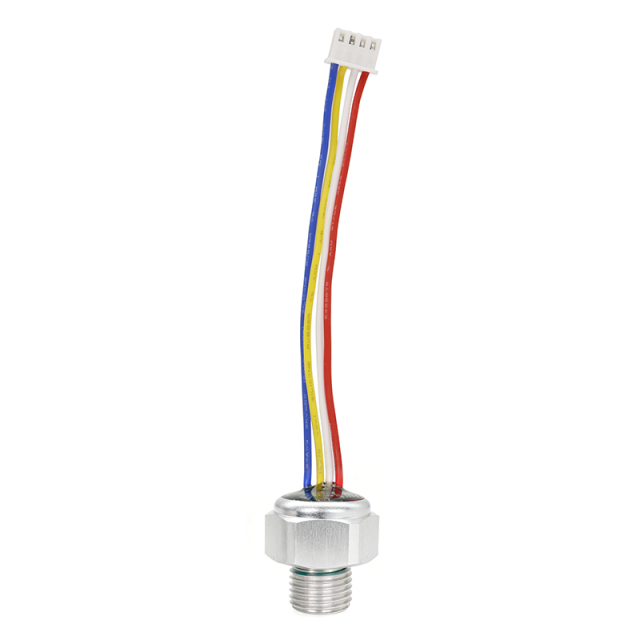
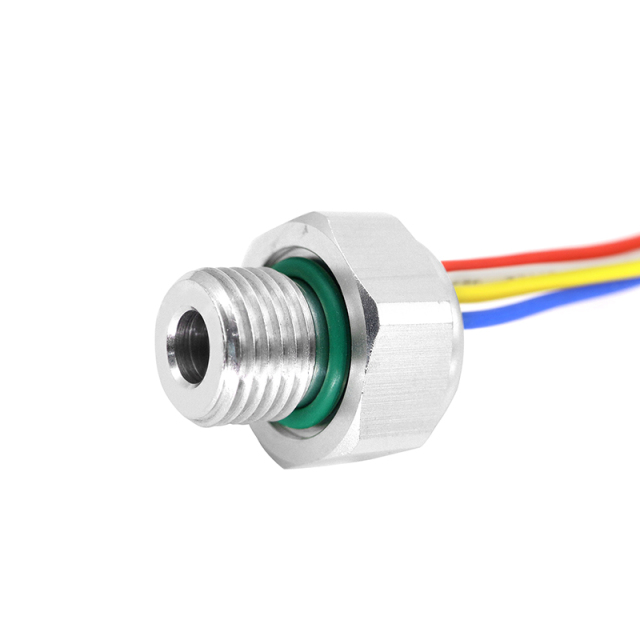
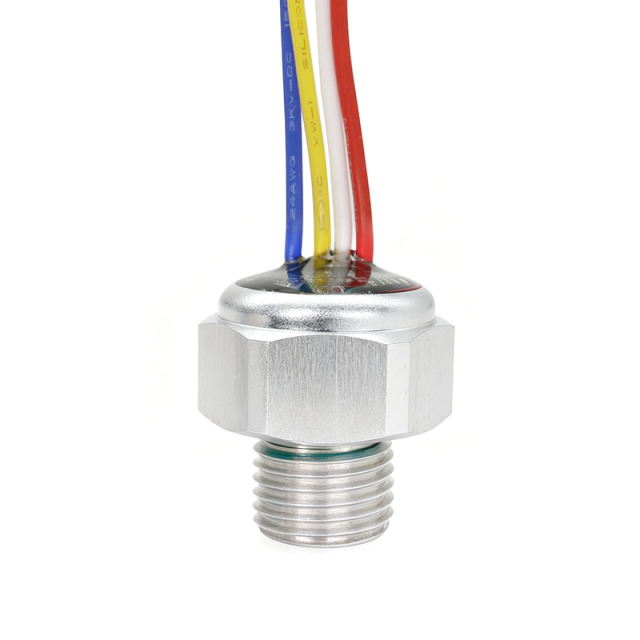
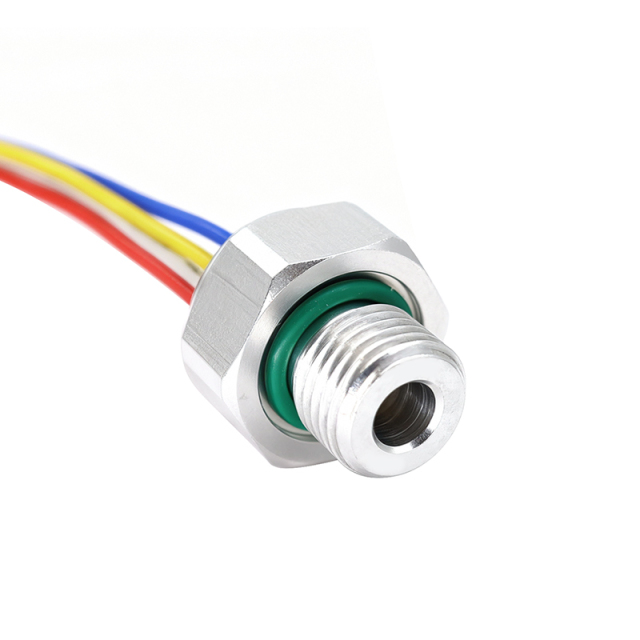
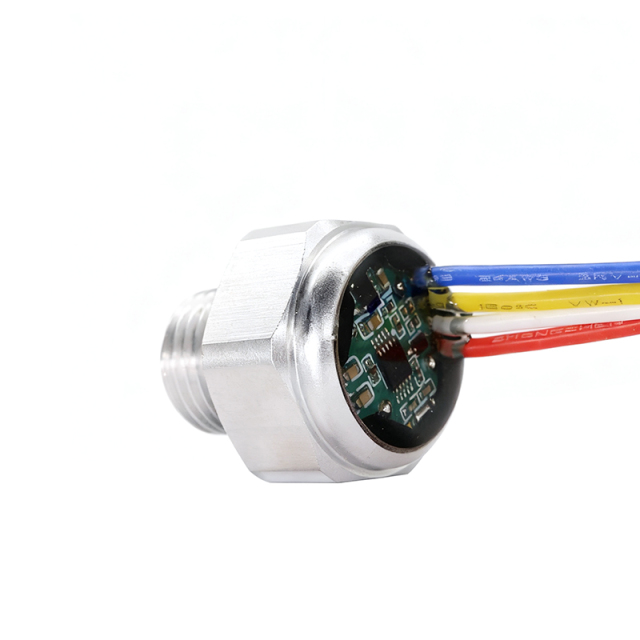
* ESD safeguarded against electrostatic discharge, eliminating worries about component failure from winter static.
* High-quality 6061 aluminum alloy housing material, offering oxidation resistance and high strength for extended service life.
* φ6mm pressure guide hole allows direct water contact with the ceramic sensing diaphragm, eliminating concerns about pressure inaccuracy due to clogging.
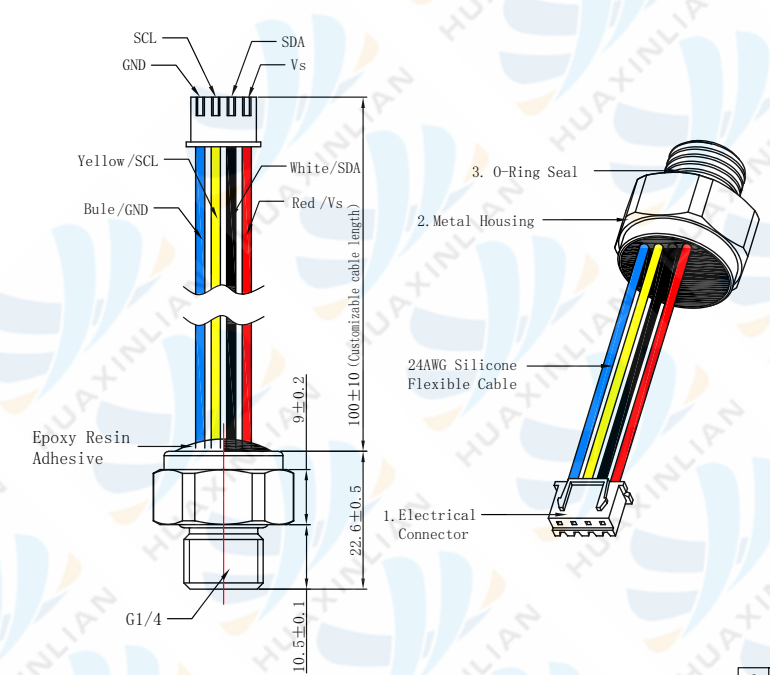
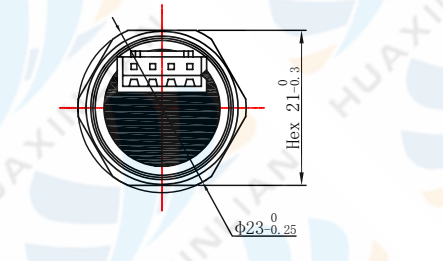
Product structure
Product Advantages
Structural and Design Innovations
The pressure transmitter incorporates a self-developed flush diaphragm ceramic pressure sensor that provides high corrosion resistance and precise signal output stability. Its φ6mm pressure guide hole design permits direct contact between the fluid and sensor diaphragm without intermediate membranes, reducing clogging and response delays typical in irrigation contexts. Encased in a 6061 aluminum alloy housing, the system offers enhanced mechanical robustness and oxidation protection, extending its operational lifespan in chemically aggressive agricultural environments. The dual output modes—digital IIC and analog voltage—enable seamless integration with diverse control systems and monitoring hardware. Built-in protections against reverse polarity, short circuits, and electrostatic discharge ensure operational reliability during complex field deployments.
Performance Reliability and Operational Benefits
This pressure transmitter demonstrates high accuracy and long-term stability under variable temperature and pressure conditions characteristic of agricultural irrigation systems. Its flush diaphragm ceramic sensor core maintains sensitivity despite exposure to corrosive fertilizers and pesticides. The device supports easy zero-point recalibration, preserving measurement precision during extended use. Compatibility with a broad voltage range, including standard battery supplies, enhances deployment flexibility. The robust protection features minimize downtime risks, while the precise digital IIC signaling improves data communication integrity. Consequently, engineers and procurement professionals can rely on this pressure transducer manufacturer’s product to deliver consistent performance that supports effective irrigation control strategies and resource conservation.
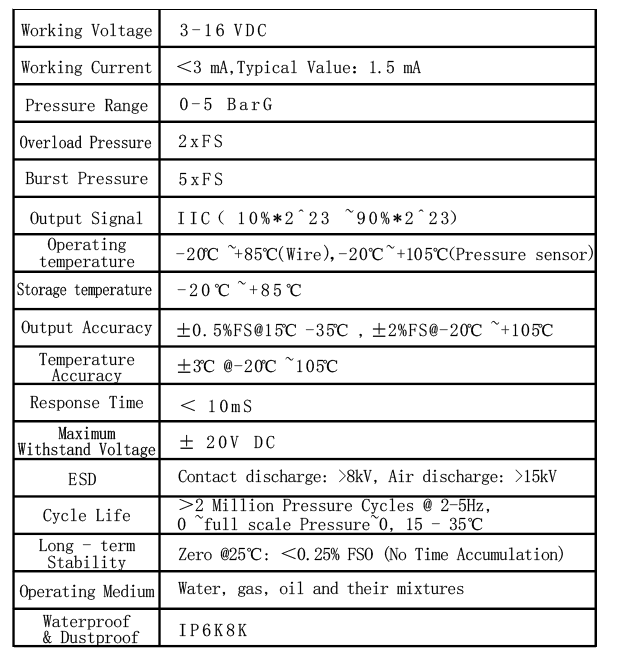
Product Parameters
Use Scenarios
Precision Pressure Monitoring in Water-Fertilizer Integrated Pipe Networks
In agricultural environments utilizing water-fertilizer integrated pipe systems, maintaining accurate pressure measurements is critical for optimizing nutrient delivery and irrigation efficiency. This pressure transmitter plays a vital role by providing real-time pressure data that accounts for the corrosive properties of fertilizers and pesticides. Thanks to its ceramic pressure sensor and corrosion-resistant housing, it performs accurately despite chemical exposure. Integrated within automated irrigation controllers, the device enables adjustments based on flow and pressure feedback, ensuring uniform distribution and preventing under- or over-pressurization that could compromise crop health. Compliance with industrial quality standards supports reliability and facilitates compatibility with existing agricultural monitoring infrastructure.
Control and Optimization of Greenhouse Irrigation Systems
Greenhouse irrigation requires highly responsive and reliable pressure sensing to regulate water delivery in tightly controlled environments. This pressure sensor module allows precise measurement of pressure fluctuations within irrigation piping, supporting the dynamic demands of greenhouse water and nutrient control systems. Its flush diaphragm ceramic sensor provides superior resistance against chemical and particulate fouling, common in intensive horticultural applications. The transmitter’s dual-output functionality enables integration with programmable logic controllers and IoT monitoring platforms for continuous data acquisition and remote management. By accurately measuring pressure variations, this pressure transducer manufacturer’s solution assists in maintaining optimal conditions, improving crop yield and reducing water consumption within greenhouse operations.
FAQ
Q1: Are your company's products manufactured in-house? Is it a factory?
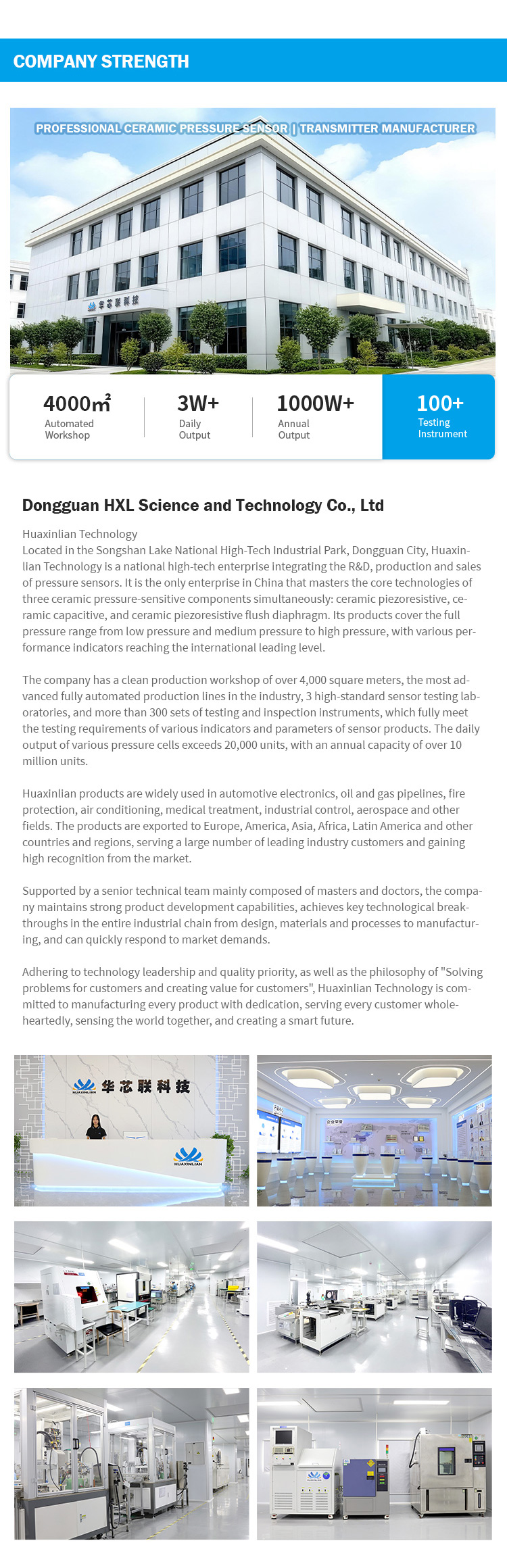
A: Yes, we have a fully automated production facility of over 4,000 square meters in Jiangxi.
Q2: What is the production capacity of the factory?
A: We produce up to 300,000 sets per month.
Q3: What is your typical lead time for delivery?
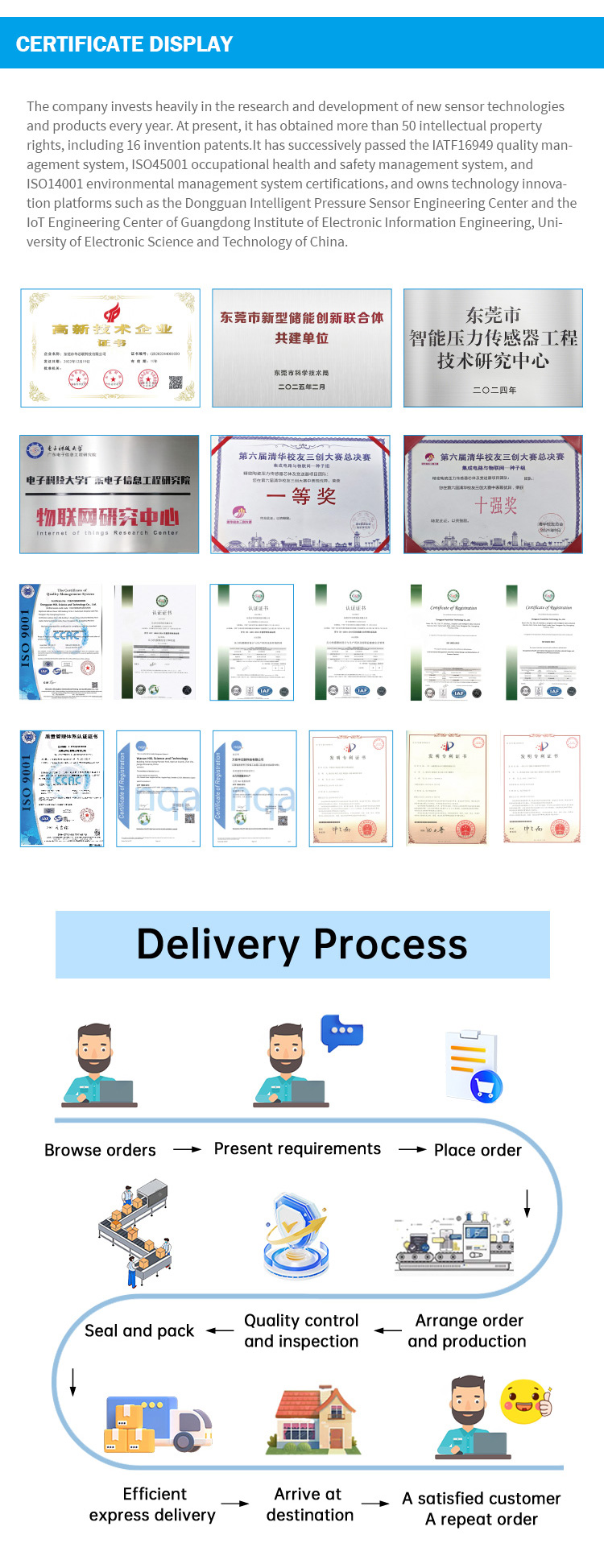
A: It ranges from 3 days to 30 days, depending on the order quantity and specific requirements.
Q4: What are the advantages of your products? How do they differ from others?
A: Our products have excellent consistency in quality due to our fully automated production lines, achieving a comprehensive TEB accuracy of up to 1%.
Q5: Do you have any R&D patents?
A: Yes, we have 25 proprietary patent applications, including 9 national patents.
Q6: Are your products specifically for gauge pressure?
A: We offer gauge pressure, absolute pressure, and sealed gauge pressure products.
Q7: Can your pressure transmitters be customized according to our requirements?
A: Yes, we support customization of parameters such as measurement range, output signal, thread interface and protection level to meet your personalized application needs.
Q8: What is the working principle of your ceramic pressure transmitter?
A: Our transmitter adopts a flush diaphragm ceramic pressure sensor as the core component. When the pressure acts on the ceramic diaphragm, it will produce a tiny deformation, which is converted into a standard electrical signal output through the Wheatstone bridge circuit, so that the pressure value can be measured accurately.
Q9: In addition to pressure transmitters, does your company manufacture any other products?
A: In addition to manufacturing transmitters, we also produce pressure sensor cells and modules.
Q10: What corrosion-resistant materials are used in your pressure transmitters?
A: Our pressure transmitters feature a flush diaphragm ceramic pressure sensor core combined with a durable 6061 aluminum alloy housing, offering strong resistance to acid, alkali, fertilizers, and pesticides. This material selection ensures long-term reliability in harsh agricultural environments and supports precise measurement accuracy.
Q11: Can you customize the output signals or pressure ranges of your pressure transmitter?
A: Yes, we provide customization options for the pressure transmitter parameters including measurement range, output signals (IIC digital or 0.5-4.5V analog), thread interfaces, and protection levels. This flexibility adapts to varied industrial needs for precise pressure and flow monitoring.
Q12: How should I install and connect the pressure transmitter for optimal performance?
A: Installation requires connecting the transmitter to a 3-16V DC power supply, compatible with common voltages like 5V, 9V, or 12V. The φ6mm pressure guide hole must be exposed to the fluid medium. Our built-in reverse polarity, short-circuit, and ESD protections support stable operation even in complex irrigation systems.
Q13: What lead times and production capacities can I expect when ordering your pressure transmitters?
A: We operate a fully automated 4,000 m² factory producing over 20,000 pressure sensor units daily, with annual capacity exceeding 10 million. Typical lead times range from 3 to 30 days, depending on order volume and specifications. We ensure consistent supply from a reliable pressure transmitter manufacturer.